Orchestra
A real-time AI assistant that sits beside candidates during live interviews: listening, reading the screen, and surfacing the right answer in the moment. Used by 10,000+ people preparing for Google, Meta, Amazon and Microsoft.
Lead Designer & PM
Figma
2025
10,000+ candidates
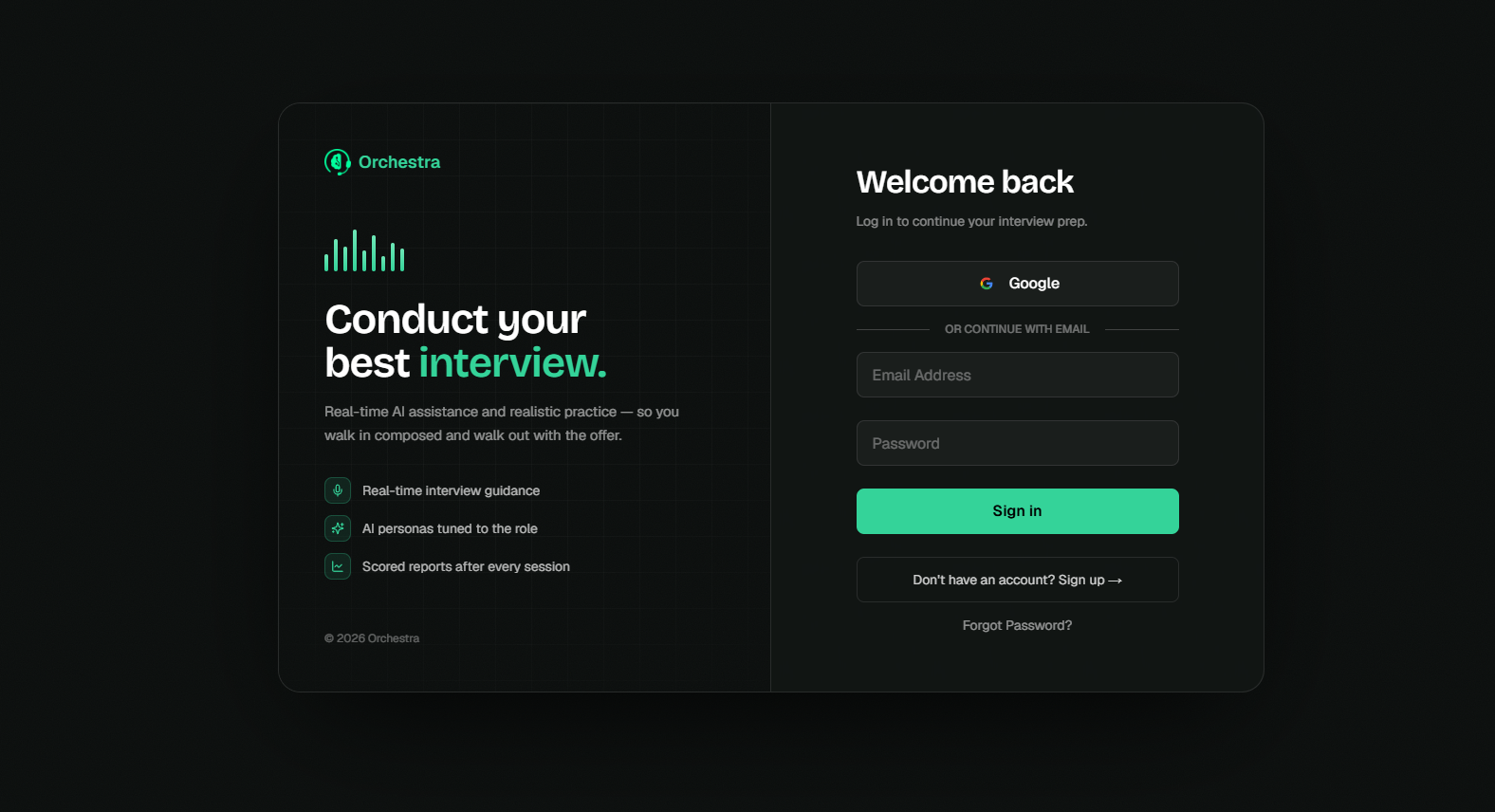 Fig. 01 - Orchestra login & onboarding
Help someone think clearly under the most pressure they'll feel all year.
A live technical interview is a brutal interface problem. The user is talking, being judged, watching a shared screen, and trying to recall something specific. All at once. Orchestra's promise was to ride alongside that moment in real time: hear the question, see the screen, and offer a grounded prompt fast enough to be useful before the silence got awkward.
I led design alongside a mid-level designer and carried the product hat: deciding what shipped, how features were scoped, and where the experience had to be ruthless about speed and trust.
Every pixel competes with the interview itself.
The core constraints shaped every decision:
- Glanceability over completeness: a candidate can spare a fraction of a second, not a paragraph.
- Calm over clever: anything flashy reads as panic. The UI had to feel like a steady hand.
- Modes for different risk appetites: some users want full assist, others just a nudge or pure practice.
- Onboarding in seconds: people arrive minutes before a real interview, not days.
Research first, then design under real constraints.
I started with user research to understand the moment we were designing for, then shadowed similar tools already in the market to see where they helped a candidate and where they got in the way. That gave me a clear read on what to keep and what to avoid.
From there I moved into wireframes to settle structure and hierarchy, then into Figma for the high-fidelity design and an interactive prototype. We ran usability testing on that prototype, tuned the modes and the suggestion card from what we learned, and handed a production-ready design to engineering.
A modal system that scales from full assist to pure practice.
Real-Time AI is the core: a single suggestion card that prioritizes one confident answer over a wall of options, with supporting points collapsed beneath it. Vision View extends the same logic to whatever's on screen (code, a diagram, a prompt) so the assist is grounded in what the interviewer is actually showing.
Combo Mode blends voice and vision for system-design rounds, while Practice Mode strips the safety net entirely for rehearsal. One mental model, four intensities, so a user never has to relearn the interface mid-stress.
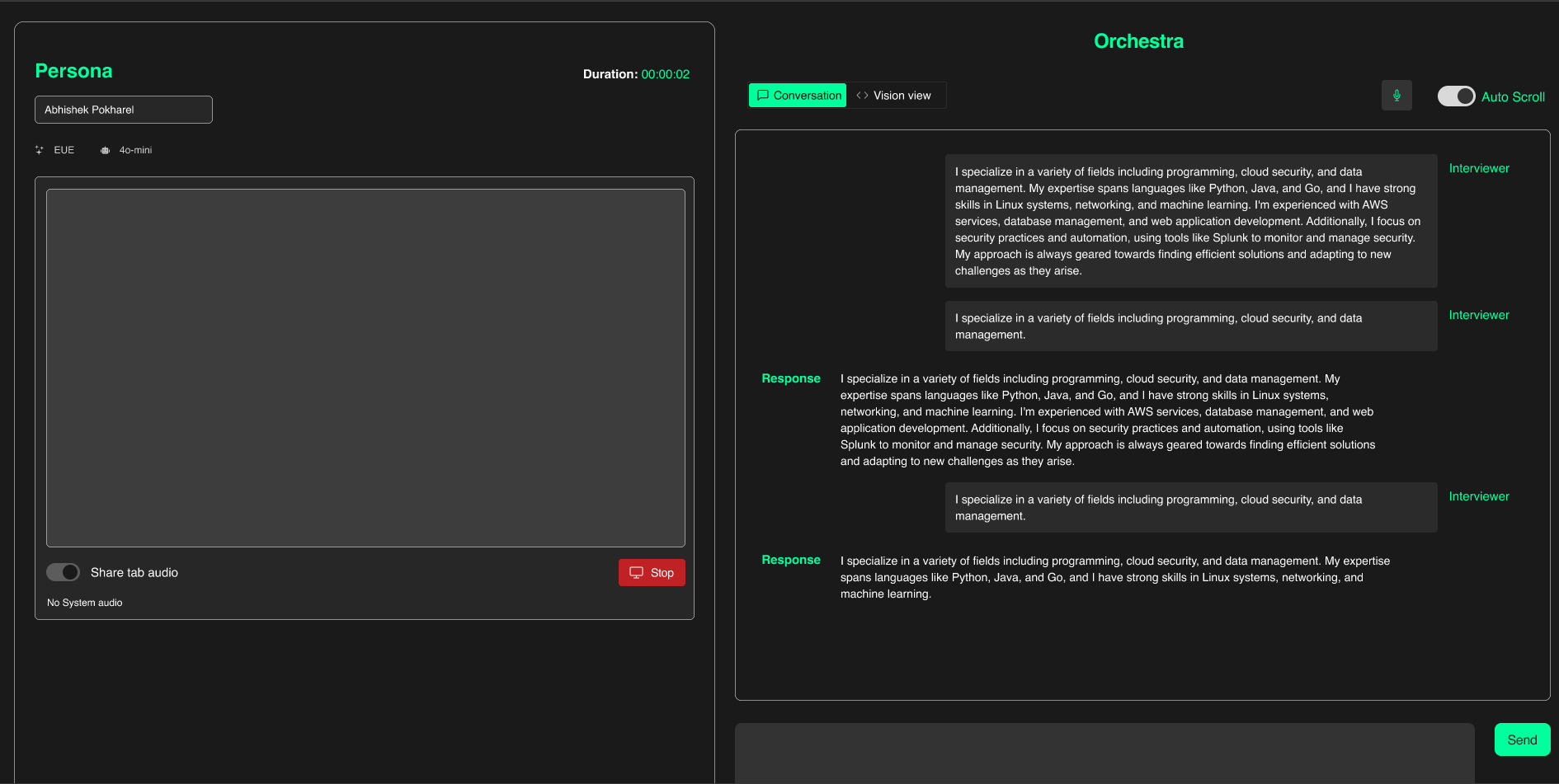 Fig. 02 · Real-Time AI, one grounded answer in the moment
Onboarding, persona creation, and a pricing experience that earns trust.
I shaped the onboarding to get someone from sign-up to ready in the few minutes they actually have, and designed persona creation so the assistant could be tuned to a candidate's target role and background.
On the commercial side I owned the pricing experience: framing tiers around real interview moments rather than abstract feature lists, so the value was obvious at the exact point someone decided whether to rely on it.
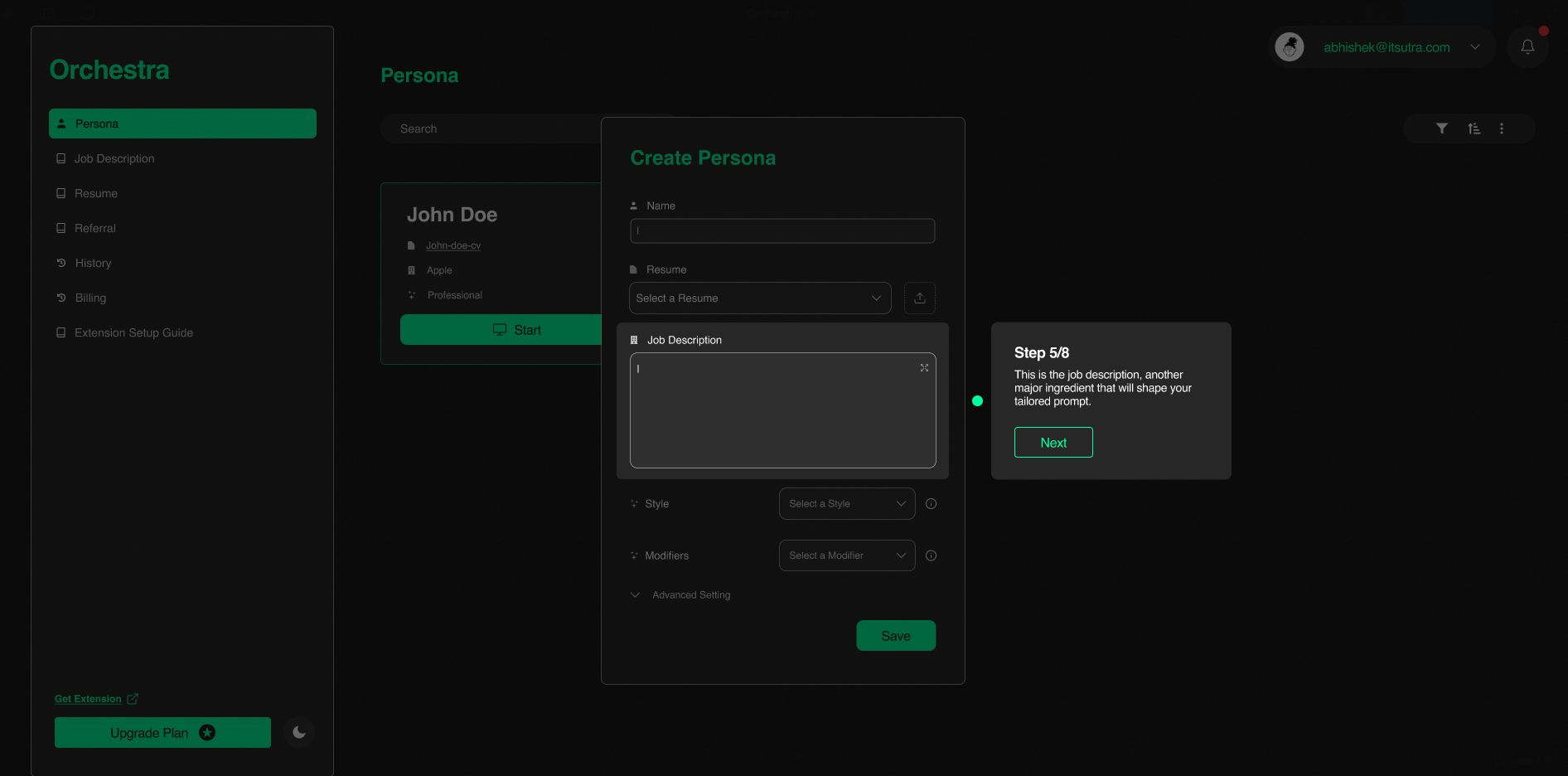 Fig. 03 · Persona creation, a guided eight-step setup
A product people trusted in their highest-stakes moments.
Orchestra grew into a live SaaS used by more than ten thousand candidates targeting the most competitive roles in tech. The design system behind the modes kept the experience coherent as features expanded, and the product-and-design dual role meant scope decisions and UX decisions stayed in sync instead of fighting each other.