OneFPL
A free, no-login Fantasy Premier League companion with nine integrated tools and live data that refreshes every 30 seconds. I found the gap in the market, designed it, and built it solo with Claude Code, end to end, all the way to live users.
Solo: designer & builder
Claude Code · live FPL API
2025
Live · iterating
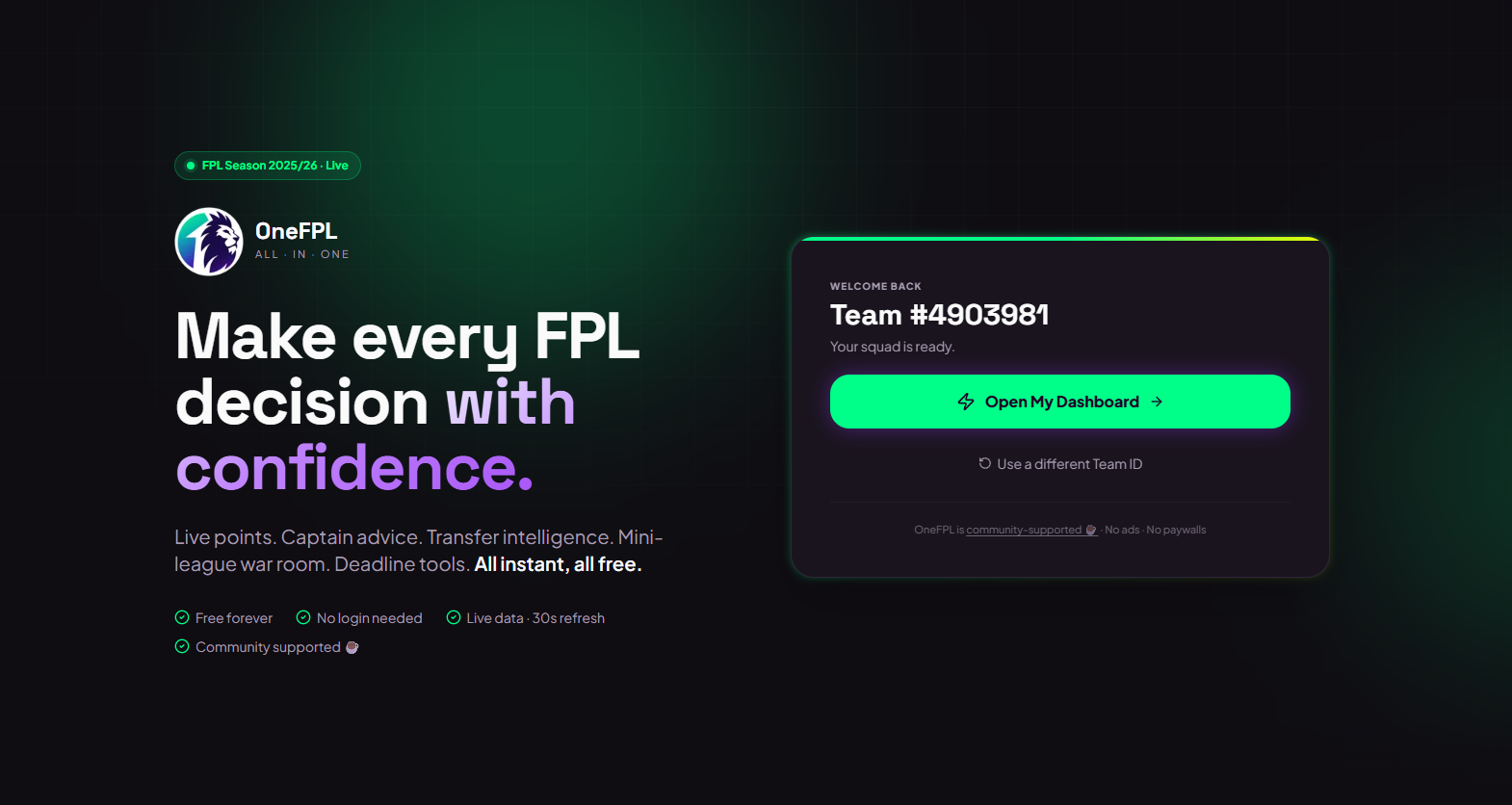 Fig. 01 - OneFPL deadline-day dashboard
A market full of tools, and still a real gap.
Fantasy Premier League has millions of managers and no shortage of stats sites, but almost all of them ask you to log in, sit behind a paywall, or scatter the answers across five tabs. I saw a specific, underserved slot: free, no-login, genuinely live, with the tools a manager actually opens on deadline day sitting in one place.
This was mine end to end: I defined the problem, scoped it, designed it, and built it. No brief, no client, no handoff. Just a hypothesis about what was missing.
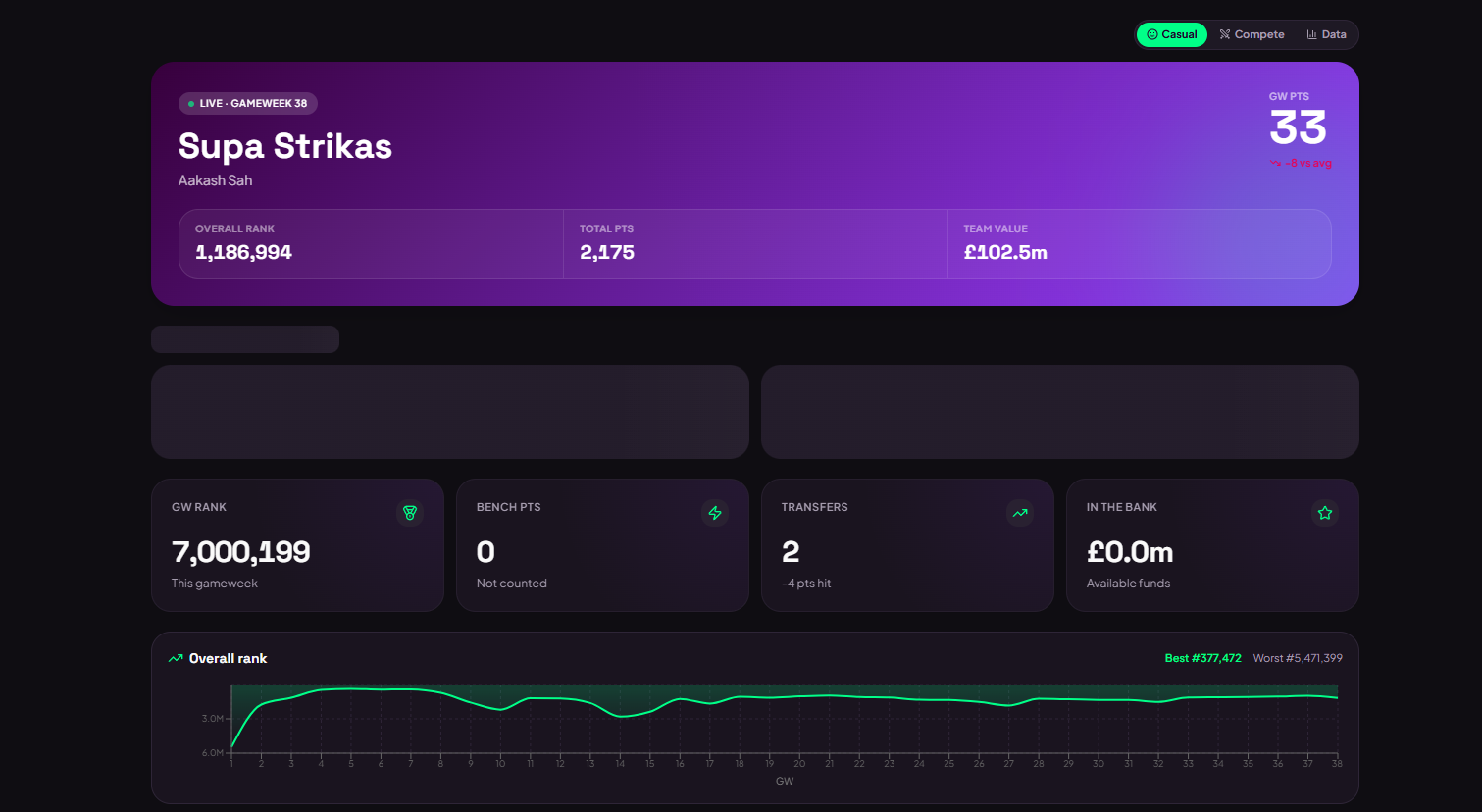 Fig. 02 · The manager's live dashboard
Nine tools, one deadline-day workflow.
The scope was a product decision before it was a design one: these nine earned their place because managers reach for them in the same 30 minutes:
- Live League Table & Mini-League War Room: where you actually stand, right now.
- Captain Picks & Transfer Planner: the two highest-leverage weekly decisions.
- Price Change Predictor & Injury News: the time-sensitive edges.
- FDR Heatmap & Head-to-Head Compare: fixture and player judgment at a glance.
- Player Stats across 500+ players: the depth underneath every other tool.
30 seconds is a design constraint, not just an API setting.
Live data changes the rules. Numbers move while you're looking at them, so the interface had to make freshness legible without being noisy: a calm pulse, not a barrage of flashing cells. I leaned on dense, scannable tables and a fixture heatmap that lets you read six gameweeks of difficulty in a single sweep, because that's how managers actually make calls.
No login meant the first screen had to deliver value before anyone committed anything, so the most-used tools surface immediately, no setup wall in the way.
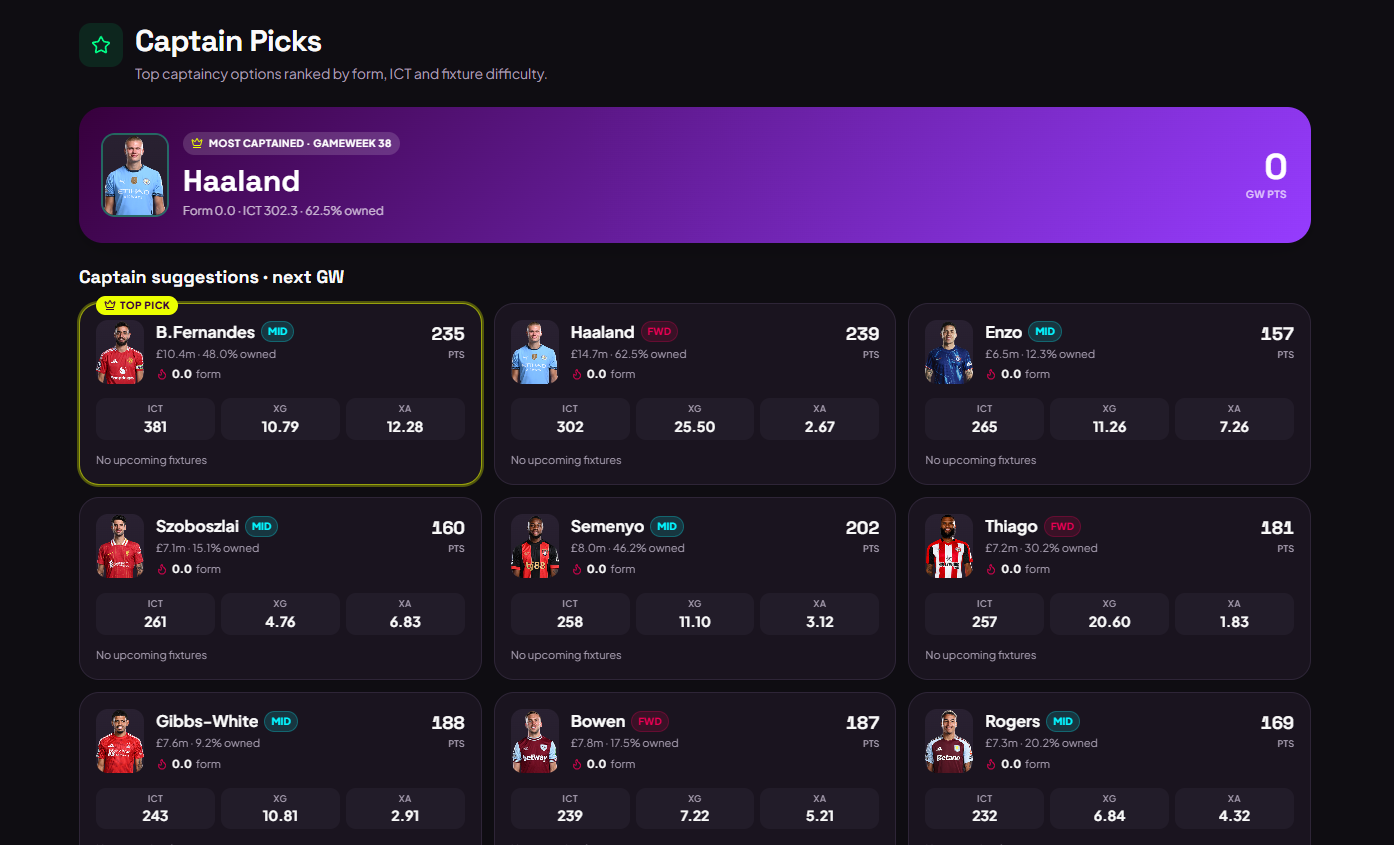 Fig. 03 · Captain Picks
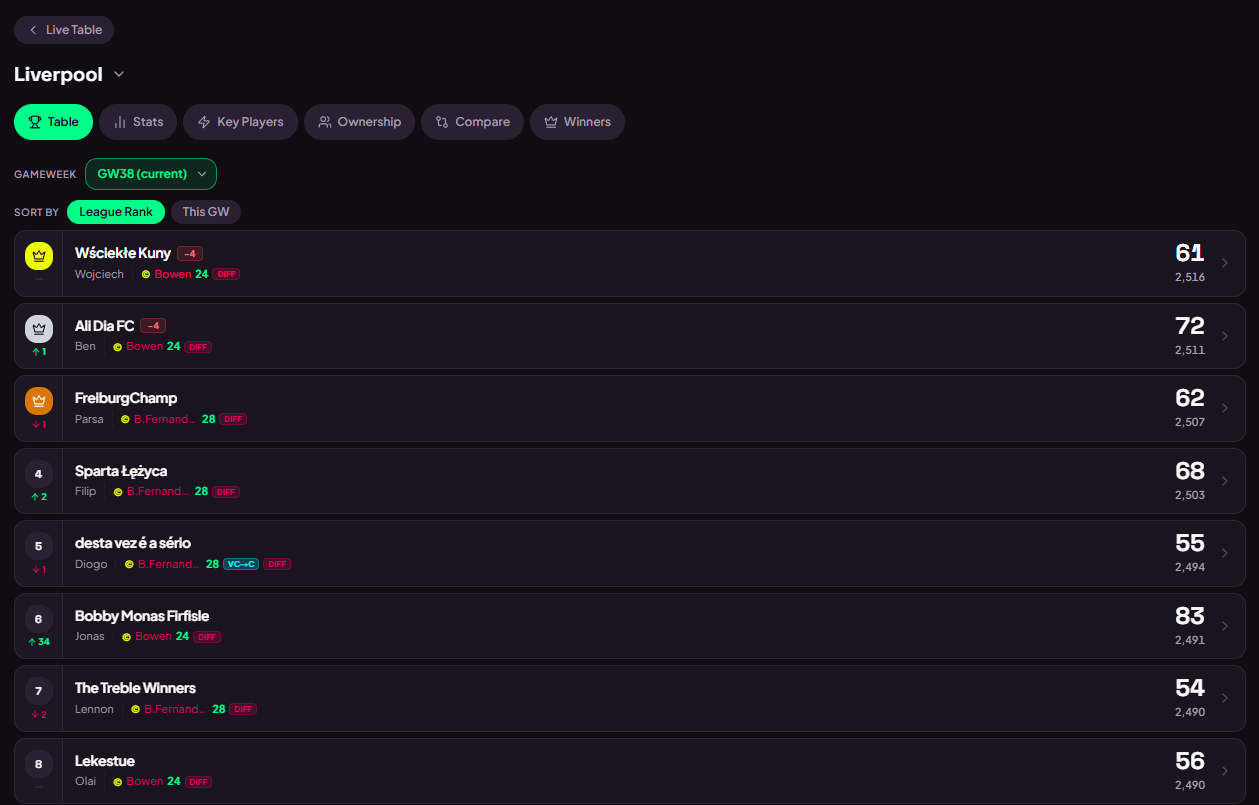 Fig. 04 · Live mini-league table
From Figma instinct to live deployment, with Claude Code.
OneFPL is the clearest proof of the AI-native way I work now. I used Claude Code to move from design intent straight into a deployed, multi-page web app, wiring the live FPL API, handling the 30-second refresh, and shipping iteratively. The design and the build informed each other in the same loop instead of across a handoff.
That collapse of the design-to-ship gap is the point: a single person can now take a product hypothesis all the way to real users, and then keep tuning it from their feedback.
It was also a deliberate learning project. I taught myself the parts that sit outside design, the database, the hosting, the deployment, so I could genuinely own the whole stack rather than stop at the handoff.
A live product, earning its place in managers' routines.
OneFPL runs in production today, refreshing live, with managers using it through the season and feeding back into what comes next. It's the case study that ties the whole portfolio together: research instinct, product judgment, design craft, and the ability to actually ship, all owned by one person.